Europe, Middle East, Africa (EMEA)
Asia Pacific (APAC)
Americas (AM)

- Advanced Customer Training
- AUTOBAG® Product Resource Library
- AutoLabel Software Tools and Support
- Customer Service
- Custom Bagging Machine Applications
- Custom Engineering and Integrated Systems
- Factory Service Repair Center
- Field Service and Preventive Maintenance
- Financing and Payment Options
- Graphics, Art & Imaging for Custom Branded Bag Packaging
- Systems Advantage: The Total Systems Approach to Bag Packaging
- Technical Phone Support
Improve Package Development with an In-House Test Lab
Why an In-House Packaging Test Lab Gives CPGs a Competitive Edge
In today’s competitive CPG landscape, packaging is far more than aesthetics — it’s a performance engine that protects product quality, reduces costs, and drives sustainability. Partnering with a packaging supplier that has an in-house plastics testing lab gives CPG brands a strategic advantage across speed-to-market, product integrity, regulatory compliance, and innovation. Here’s how to turn that capability into measurable gains.
Faster Development and Iteration
An on-site testing lab shortens the feedback loop. Prototype samples can be tested immediately for barrier properties, tensile strength, impact resistance, migration, and seal integrity. Faster iterations mean quicker shelf-ready designs, reduced time-to-market, and fewer costly reformulations late in development.
Tailored Product Protection and Reduced Waste
Lab testing validates that packaging will perform under real-world stresses: temperature fluctuations, stacking loads, drop impact, and chemical exposure. Confirmed durability reduces product damage and recalls, lowering logistics waste and protecting brand reputation. For perishable goods, verified barrier performance can extend shelf life, which improves supply chain efficiency and helps reduce retail shrink.
Regulatory Confidence and Faster Approvals
In-house labs can run migration tests, extractables/leachables, and food-contact compliance checks to regional standards (FDA, EU, etc.). Preemptively validating compliance can accelerate regulatory approvals and reduce the risk of costly reformulation and repackaging after launch.
Cost Optimization and Material Selection
Testing enables data-driven material choices. By comparing blends, thicknesses, and barrier coatings, brands can choose the lowest-cost option that meets specs or down-gauge safely. That delivers direct material savings and often lowers transportation costs through lighter packages without sacrificing the needed level of protection.
Sustainability with Evidence
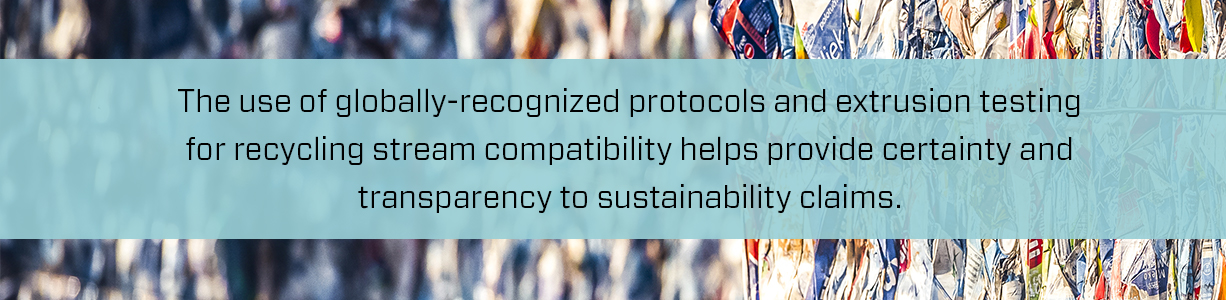
Lab data can help brands quantify recyclability, biodegradability, or recycled-content performance, creating credible sustainability claims and avoiding greenwashing. Testing also supports transition plans (e.g., moving from multi-material laminates to monomaterial solutions) by proving performance parity.
Risk Mitigation Through Customized Stress Testing
Suppliers’ labs can design unique tests that reflect a product’s specific lifecycle including retail shelving, e-commerce drops, or refrigerated distribution. Proactively identifying failure modes helps reduce field issues and insurance exposure.
Some of the ways CPG companies can leverage their supplier-partners in-house testing capability include:
- Integrate early : Involve the supplier and lab during concept phase to define test criteria and acceptance thresholds.
- Specify real-world scenarios: Provide distribution and storage conditions so tests emulate true use.
- Use comparative testing: Benchmark new designs against incumbent packaging to justify change.
- Require documented test reports: Include test protocols and results in supplier agreements.
- Collaborate on innovation: Fund co-development projects to explore lighter, recyclable, or low-cost materials with validated performance.
DID YOU KNOW?
Sealed Air has 18 ISTA-certified testing facilities across the globe, equipped to perform a range of industry-standard tests using simulated and real-world conditions such as shock, vibration, and compression. We also test materials for compatibility with recycling streams or to provide data related to other sustainability claims.
By providing in-house testing on a global scale, Sealed Air can enable faster launches, validated performance, cost and material optimization, and credible sustainability claims. For CPG brands serious about quality and differentiation, making the most of our capability is a practical, high-ROI move.
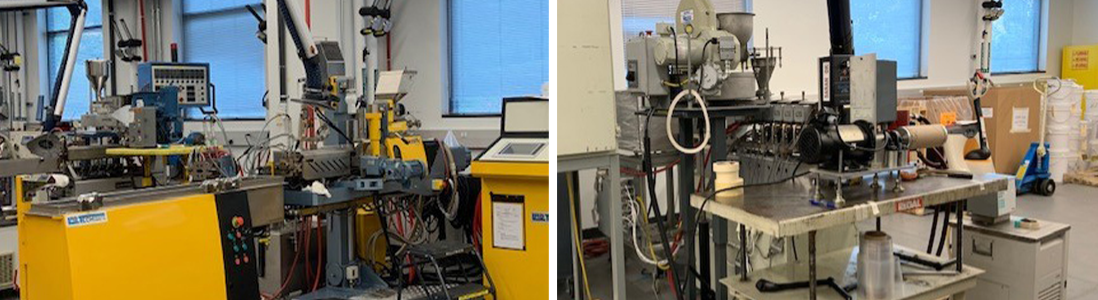
Shown above: extruders in the Sealed Air test lab. Blown film is considered by the APR as the "most stringent application and the preferred way to test innovations for recyclability."
More From Sealed Air
-
 01 The Environmental Impact of Damage
 -
 02 Closed-loop Recycling for Flexible Plastics
 -
 03 Recycled Content Packaging
 -
 04 Essential Food Packaging

Connect With Us
Get answers to common questions about our company, products, services, and beyond by filling out the form below. A dedicated representative will contact you soon to better understand and address your specific needs..
* All fields required

Thank You
Thank you for reaching out. We've received your information and will respond shortly. We appreciate your interest in Sealed Air.
Are you sure you want to cancel your submission?
Your information will not be saved.